

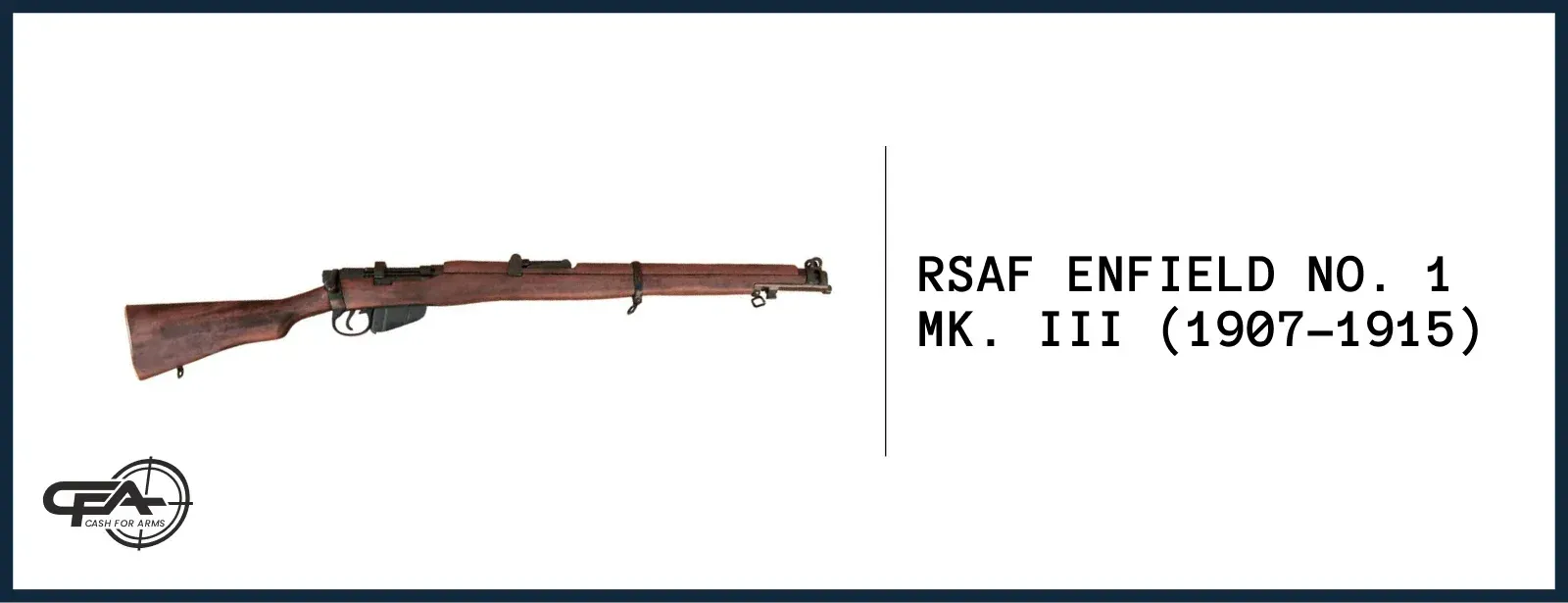
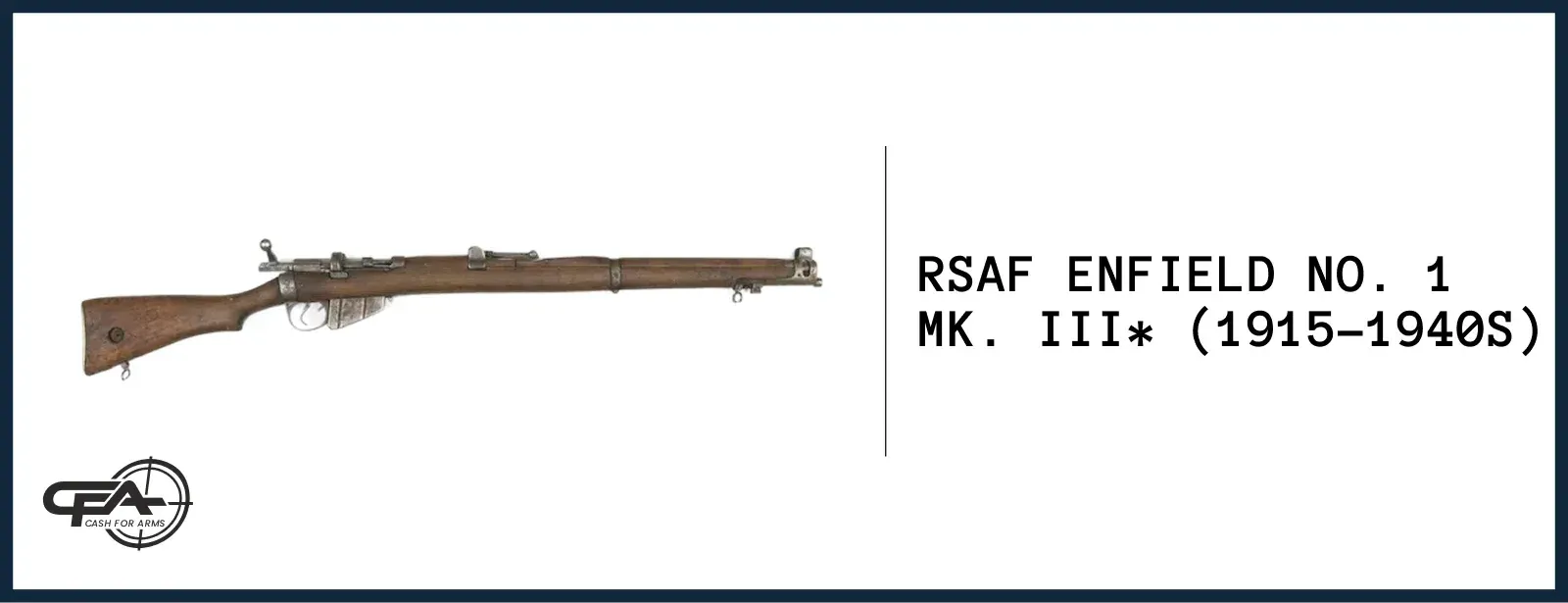
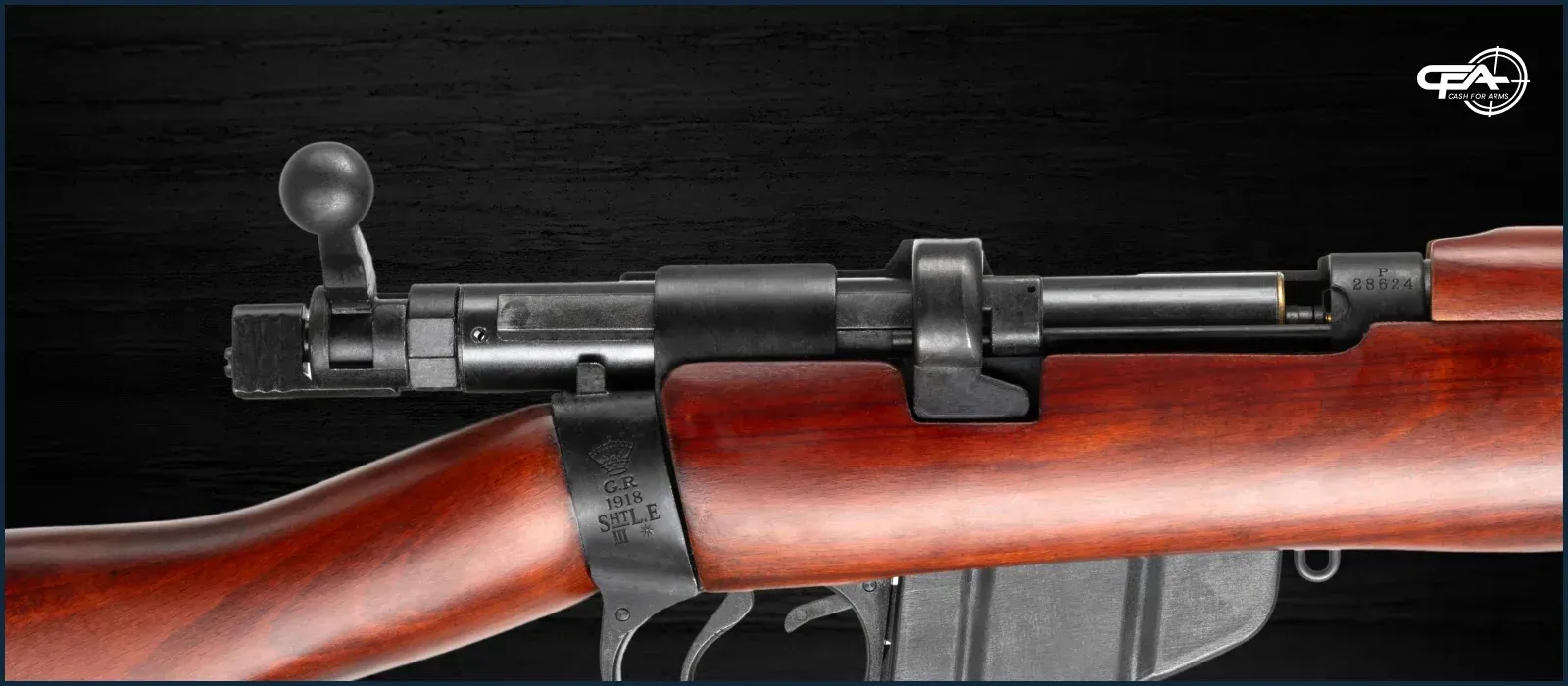
The RSAF Lee-Enfield No. 1 Mk. III SMLE (Short Magazine Lee-Enfield) is a British bolt-action rifle introduced in 1907. It served as the standard infantry rifle of the British Empire through both World Wars and beyond.
It was manufactured at the Royal Small Arms Factory in Enfield along with Birmingham Small Arms, London Small Arms, and numerous Commonwealth factories.
If you’re looking to sell your Lee-Enfield No. 1 Mk. III SMLE or want to know how much yours is worth today, this guide will walk you through its current market value and the factors that affect its pricing.
PS: If you're checking its value to sell your gun, ensure you follow federal rules. Read our guide on how to sell a gun online to stay 100% legal.
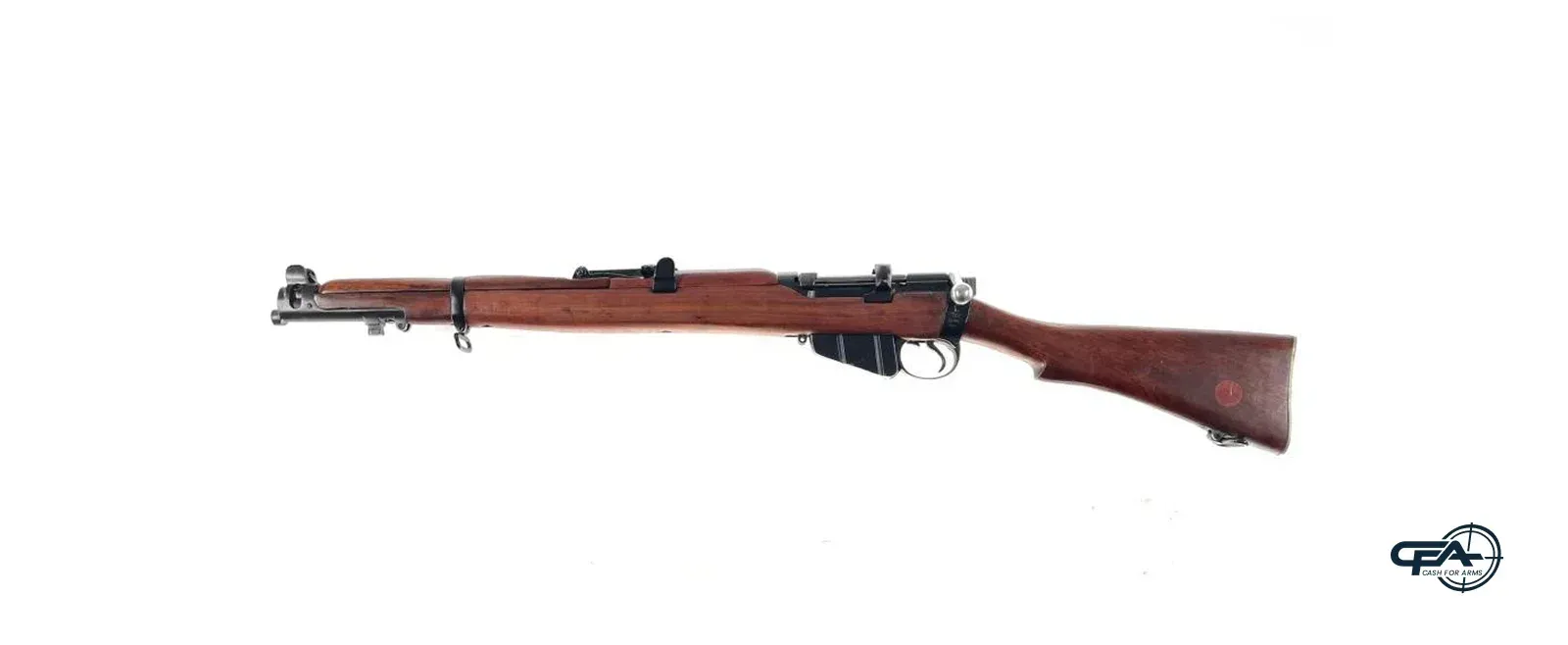
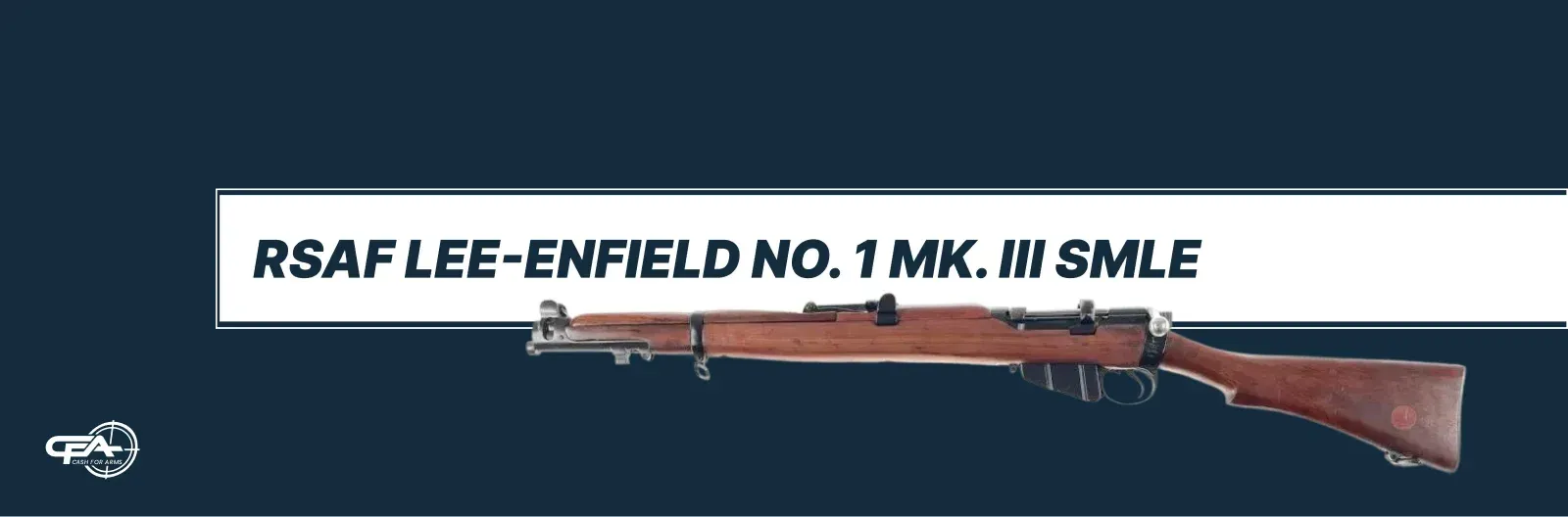
Current Market Value of a RSAF Lee-Enfield No.1 Mk.III SMLE
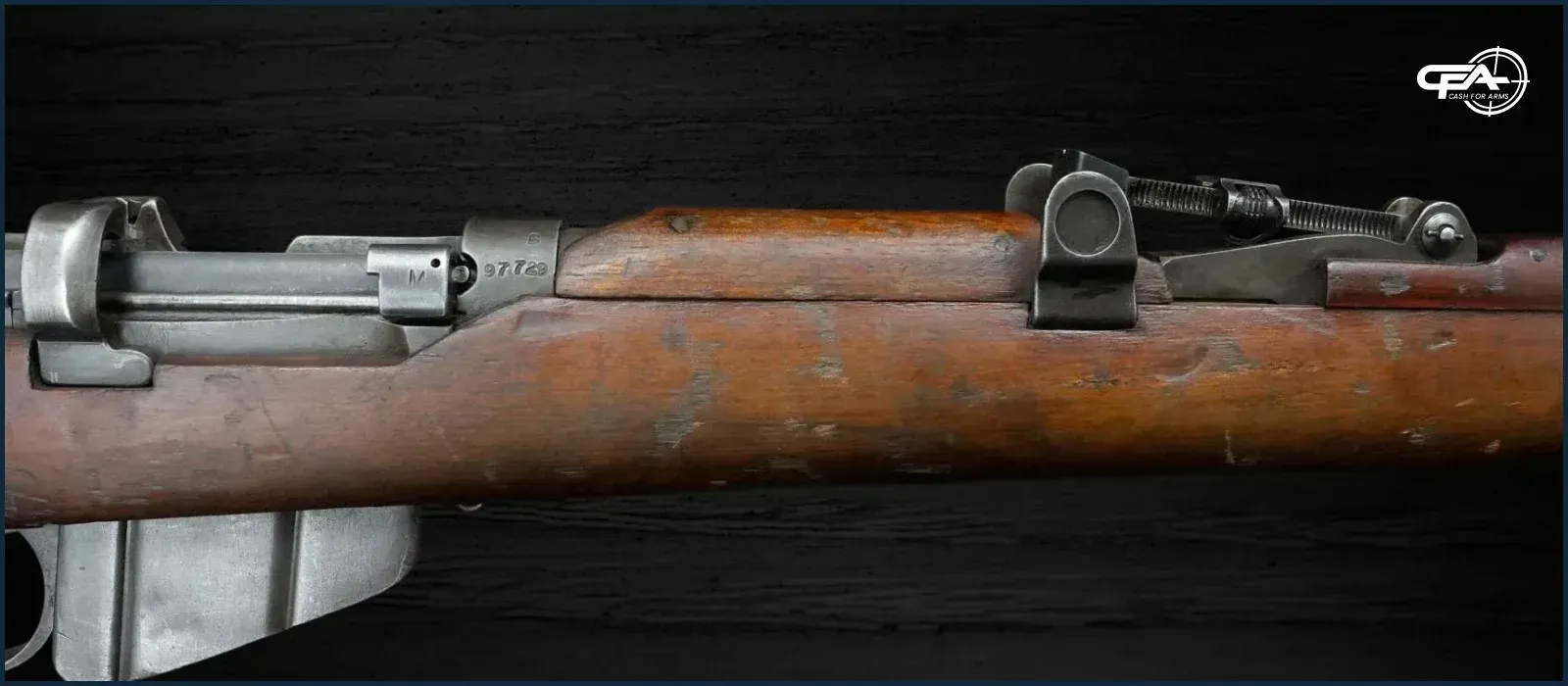
How much is a RSAF Lee-Enfield No. 1 Mk. III SMLE worth today? The average used RSAF Lee-Enfield No. 1 Mk. III SMLE is worth $220 to $685. Superb ones with good bluing can sell for up to $1,200.
Get a FREE Appraisal and Offer
Planning to sell your Lee-Enfield SMLE? Get a no-obligation appraisal and discover what your rifle is worth. We understand military surplus firearms and offer a best price guarantee.
Get THE BEST Offer for Your Lee-Enfield!
Have a Lee-Enfield SMLE you're ready to part with? We buy military rifles nationwide and make the selling process simple. Get a best price guarantee without the hassle of private sales.
Sell a Mk. III SMLE and Accessories Easy!
Have your Lee-Enfield with accessories? We buy complete sets and make it worth your while. Selling everything together means one easy transaction.
General Questions & Answers
The Lee-Enfield No.1 Mk III was introduced in 1907 and produced through both World Wars, with most rifles manufactured between 1907 and the late 1940s depending on the factory.
The No.1 Mk III* is a simplified wartime version of the rifle introduced in 1916. It removed a few non-essential features—like the magazine cut-off—to speed up production during World War I.
SMLE stands for Short Magazine Lee-Enfield, referencing its shorter rifle length (“Short”) and detachable 10-round magazine (“Magazine”).
Firing a .303-inch caliber round, it had a maximum range of 2,500 yards, but a more effective killing range of around 600. A well-trained infantryman could fire 15 aimed rounds a minute, a withering rate of fire.
Yes, the SMLE (Short Magazine Lee Enfield) was indeed a good rifle. The Lee bolt action, featuring rear-locking lugs and a detachable bolt-head, was the fastest and smoothest of all issue battle rifles of its time. A trained soldier could shoot 15-20 aimed rounds in a minute with no difficulty.
Yes, the SMLE Mk III* (renamed Rifle No. 1 Mk III* in 1926) saw extensive service throughout the Second World War, especially in the North African, Italian, Pacific, and Burmese theatres in the hands of British and Commonwealth forces.
The Pattern 1913 Enfield (P13) was an experimental rifle developed by the British Army ordnance department to serve as a replacement for the Short Magazine Lee–Enfield (SMLE). Although a completely different design from the Lee–Enfield, the Pattern 1913 rifle was designed by the Enfield engineers.
The iconic Lee-Enfield Mk III rifle, also known as SMLE (Short Magazine Lee-Enfield), was introduced on 26 January 1907. It was named after James Paris Lee, the designer of the rifle's bolt system, and the location of the factory where it was designed, the Royal Small Arms Factory in Enfield, UK.Does Lee-Enfield still exist? While they are no longer taken by uniformed soldiers into battle, Lee-Enfields still exist and are present in the arsenals of several police forces in the developing world.
Yes, the British Army had the Short Magazine Lee–Enfield Mk III Rifle, more commonly known as the SMLE. It was the standard infantry rifle in the First World War and continued to be so for much of the Second World War.
Disclaimer: We aren’t lawyers and this guide is for general information, not legal advice. Consult a lawyer if you need the latter. We can’t guarantee the information here is always current or accurate. You’re responsible for following laws in your area.