

“Best revolver in the world” and “the finest production revolver ever made.” Few guns could elicit such praise from greats like Jeff Cooper and Ian V. Hogg. But the Colt Python is one damned fine gun.
If you're checking its value to sell your gun, ensure you follow federal rules. Read our guide on how to sell a gun online to stay 100% legal.
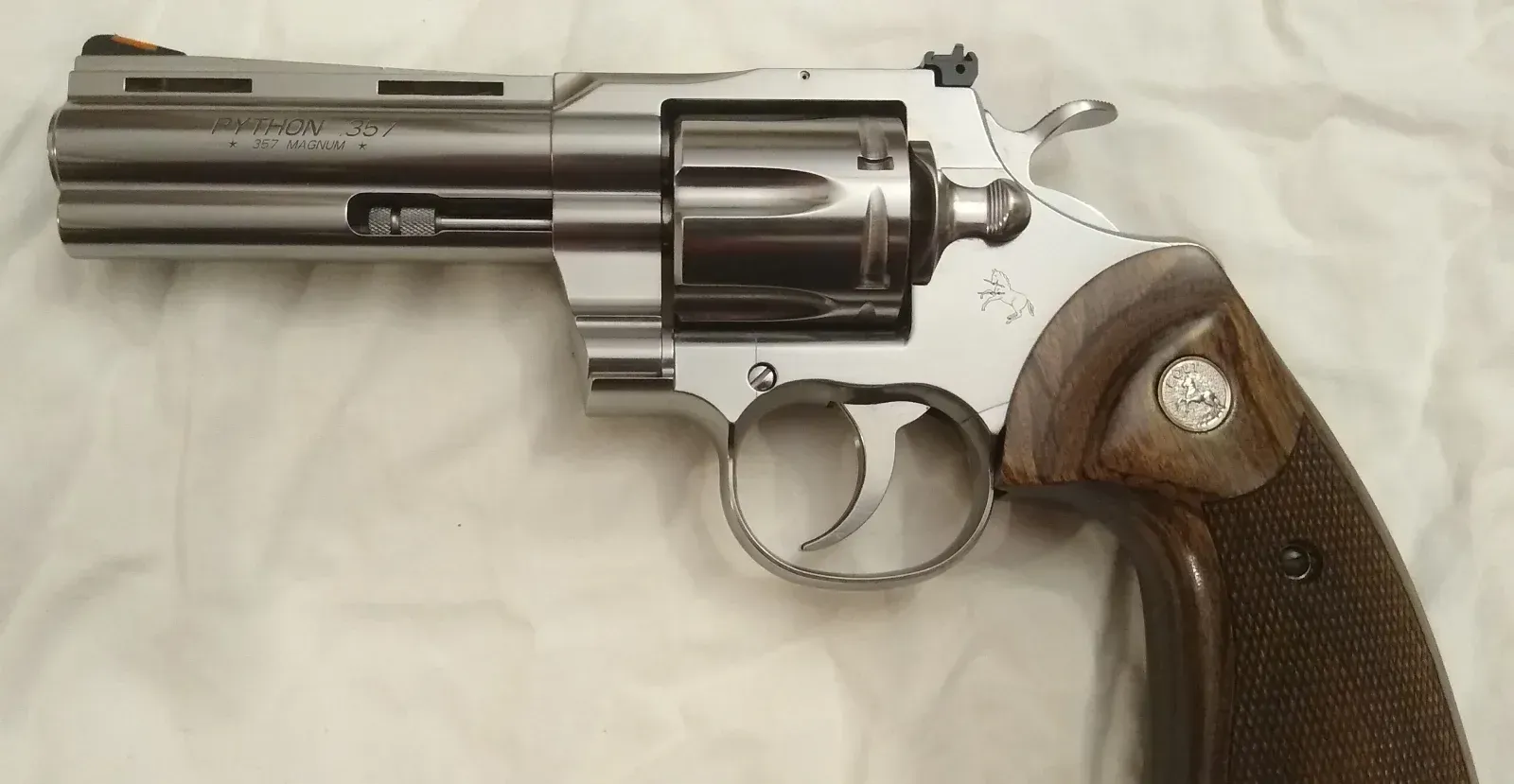
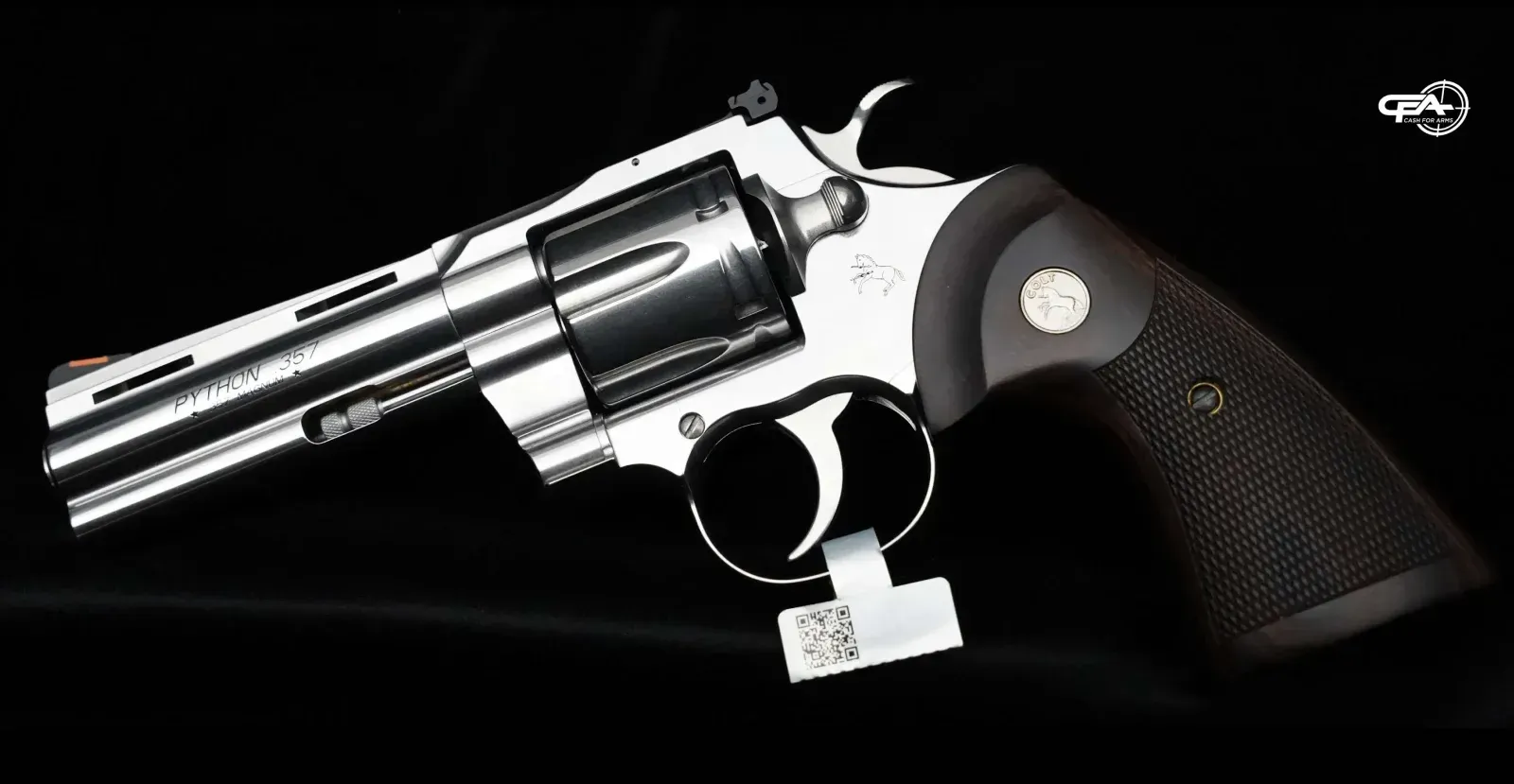
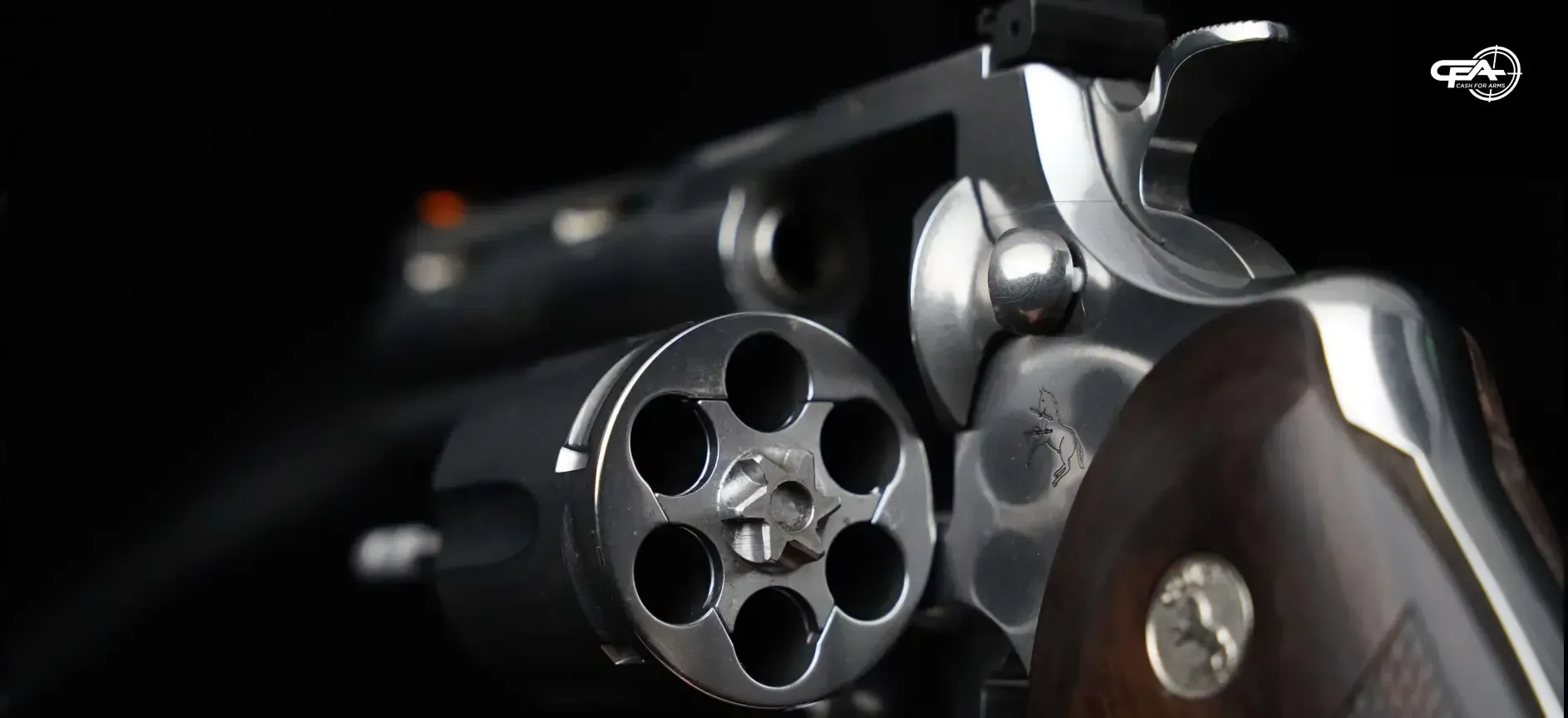
Anyway, demand for this .357 gun has never really waned. It's also enjoyed another resurgence in sales since its use in The Walking Dead by Rick Grimes. If you want to sell a Colt Python or find one in resale, we’ll help you figure out how much is a Colt Python worth today.
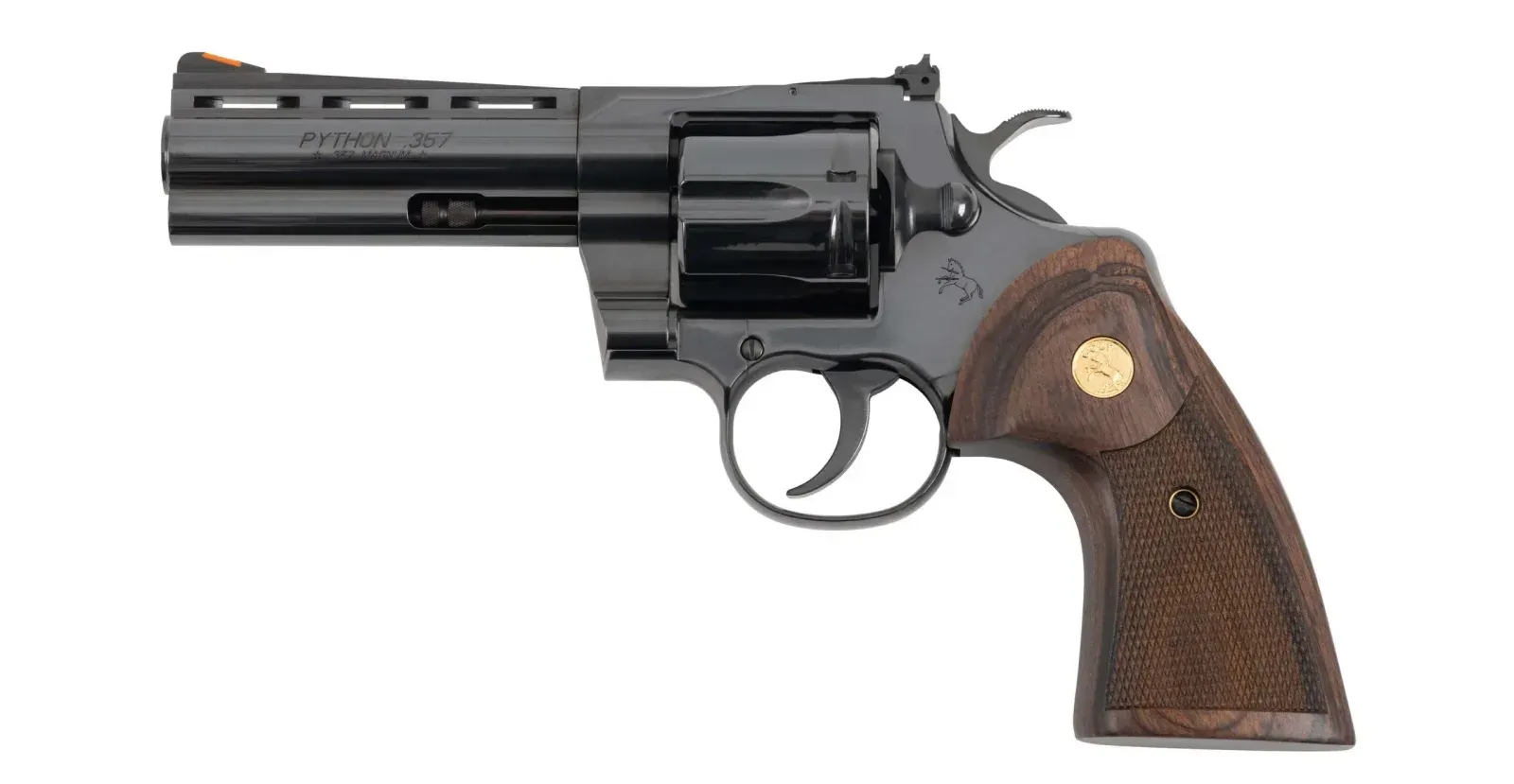
Current Market Value of a Colt Python
How much is a Colt Python? The average used Colt Python is worth $720 to $1,150. Brand-new, the Colt Python price sells for $1,599 blued, $1,499 stainless, and $1,299 matte. But collectible Pythons are worth much more.
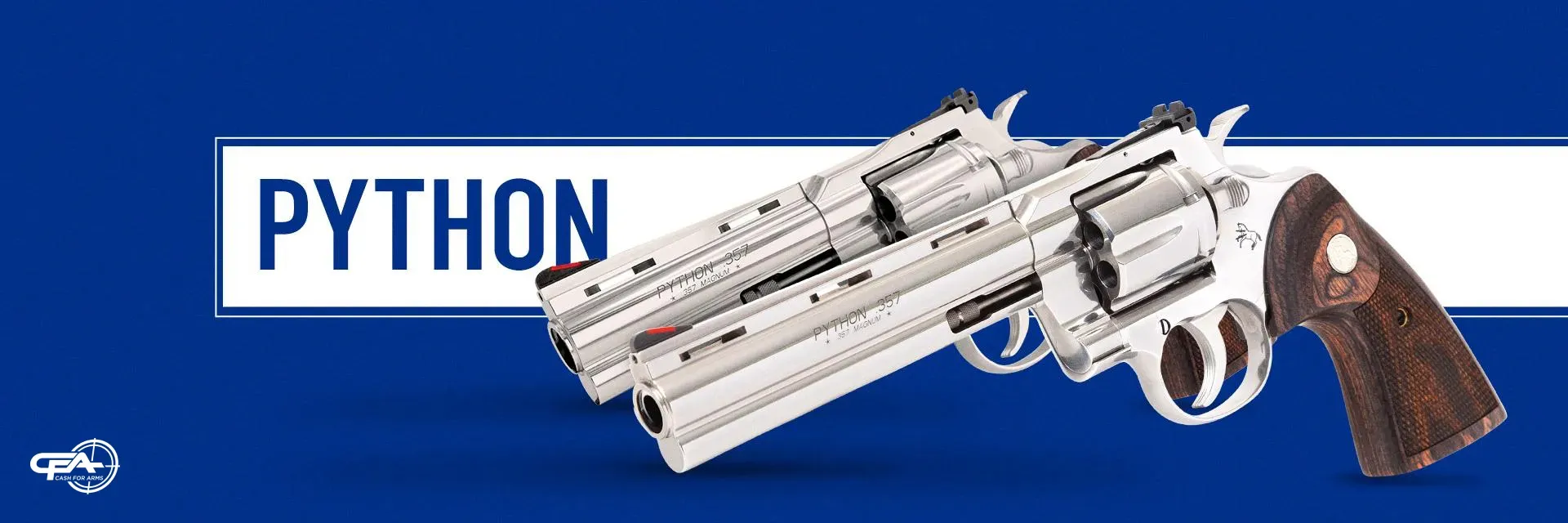
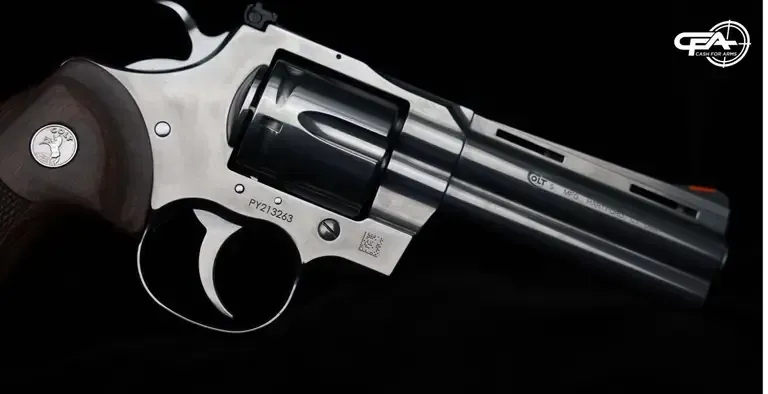
Sell Us That Colt Python!
Why not convert that Colt into cash with us? Reach out to Cash for Arms today and we’ll offer you the best market price for your gun!
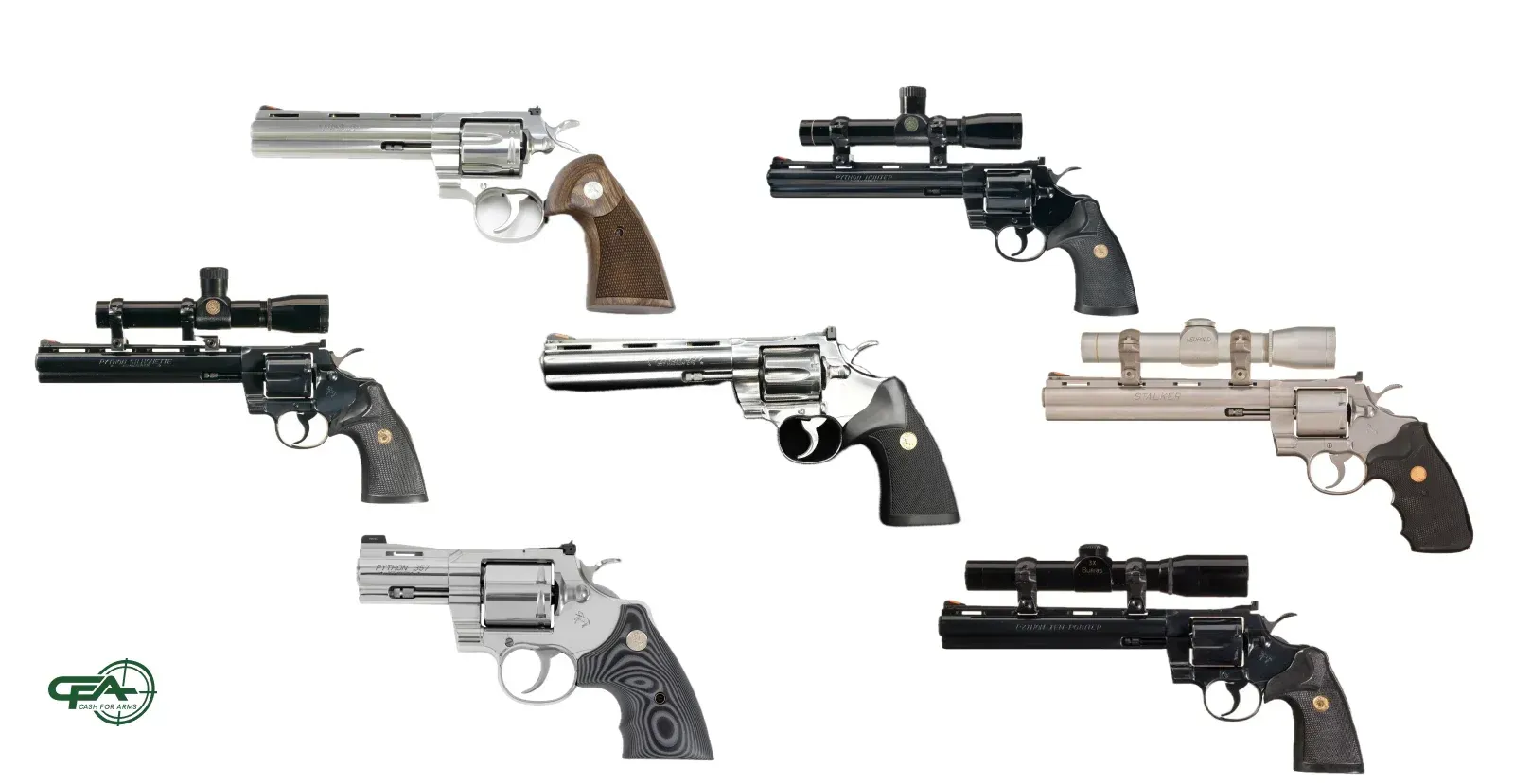
Get Your Colt Python Appraised for FREE
If you're not sure which version of the Python you have, show it to us. Our experts will identify and appraise it online for free if you're selling!
Cash in on Your Colt Python!
If you want to see what sort of big money you can get from that gun, talk to us. We even have a best price guarantee!
General Questions & Answers
The Colt Python is expensive because of its popularity as a vintage and iconic gun. It was also out of production from 2006-2019, contributing to its rarity for some years. Furthermore, it offers solid performance married to widely acclaimed good looks.
The best year for a Colt Python is arguably 1955 because that’s the gun’s birth year. Generally, the 1955-1969 series is considered the best period for Colt Python collectors. Pythons produced during this time are identifiable by their lack of a letter in the serial number. They’re highly prized by enthusiasts. 1955-1963 Colt Pythons were also handcrafted and finished (before CNC machining and mass assembly lines were adopted by Colt).
Generally, Colt Pythons hold value well. They’re good-looking and powerful guns that have iconic status among revolver fans.
Some Colt Pythons are rare, others are common. Earlier Colt Pythons are considered relatively rare and sought by collectors and gun enthusiasts.
Yes, Colt Pythons can be collectible. Specific examples are first-generation Pythons from the 1950s and limited-production-run ones like the Silhouettes. Such guns even command thousands of dollars in the market.
In most cases, the serial number won’t affect the value of a Colt Python. For the very early Pythons (like the 1955 and 1956 ones), it can bring up the value dramatically, however. Generally, single-digit and two-digit serial numbers are from 1955. Guns with these can go for tens of thousands of dollars. Three-digit ones are often from 1956.
Colt Pythons typically have their serial numbers on their frames. Look inside the crane in front of the gun’s cylinder to find the number.
We get this question a lot. The Colt Python 44 Magnum doesn’t exist – it’s actually the Colt Anaconda that’s chambered for .44 Mag. The Colt Anaconda sells for $1,299 to $1,499 retail and is usually $1,000 to $1,300 second-hand, but special editions sell for much more.
Introduced in 1955, the Colt Python was initially designed by Colt to be their premier large-frame .38 Special target revolver. As a result, the revolver boasts precision adjustable sights, a smooth trigger, robust construction, and an abundance of metal components. These features are the reasons this revolver became famous.
In single-action mode, the Python 3-inch demonstrates a clean and smooth trigger operation with almost no undesired movement. Yet, when discharging high-intensity .357 Magnum ammunition, the compact barrel of the Python can produce a significant kickback. Despite the fact that handling it with both hands might feel slightly awkward, it remains a manageable experience.
The Colt Python is the considered one of the most accurate revolvers on the market.
Disclaimer: We aren’t lawyers and this guide is for general information, not legal advice. Consult a lawyer if you need the latter. We can’t guarantee the information here is always current or accurate. You’re responsible for following laws in your area.