
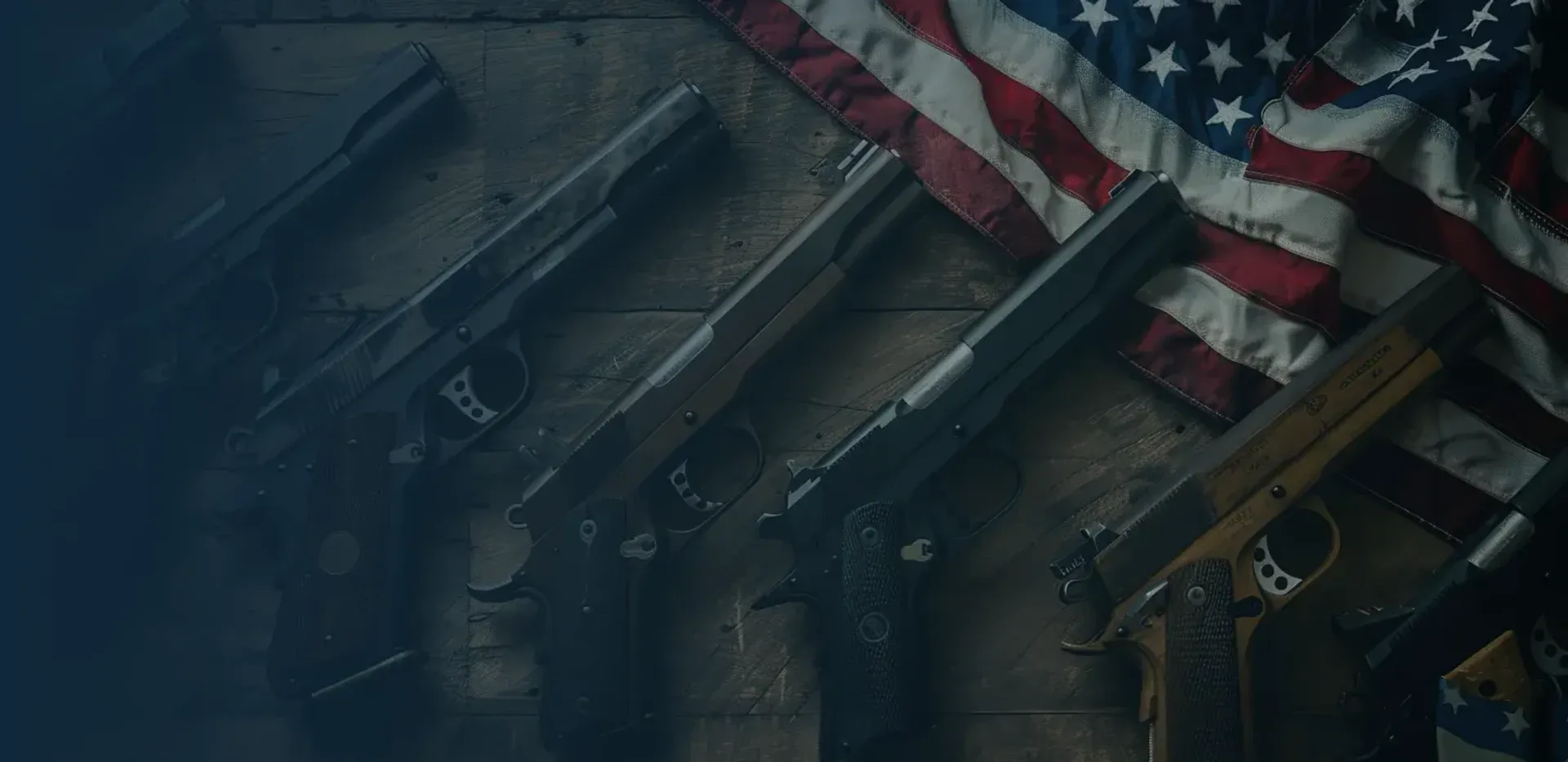
Sell My Gun in North Carolina Online for Cash
Sell your gun from home anywhere in North Carolina. Cash for Arms makes you the best market cash offer, handles the legal process, and pays you fast. No hunting for a decent local shop or driving around the Tar Heel State. No meeting strangers from the Internet. Wherever you are in North Carolina, you get a legal, fuss-free sale that even pays you the same day.
We've bought 1,084 guns from North Carolina sellers over the past 12 months.

Top Offers, Real Value
No low-balling, no guesswork. Every offer is from the latest market data: recent sold prices, condition grading, and demand for your specific make and model. That's why our offers consistently beat what local North Carolina gun shops and pawn shops will quote you.

Sell Guns Legally in North Carolina
Selling a gun in North Carolina means dealing with state and federal laws. You don't need to know either. We're federally licensed with SOT status and can handle all of it. This means you can sell your gun in North Carolina legally without having to do any research yourself.

Sell Your Gun Fast, From Home
A good buyer can be a long drive away, especially outside the major metros. Sell to us instead. Submit the details online, accept the offer, and let us arrange shipping. You won’t even have to leave your house.

Real Reviews From North Carolina Customers

Jason S.
Zebulon, NC
The staff were excellent at answering all my questions. Payment came in to my bank account within 24 hours of them receiving my shipment.
John T.
Raleigh, NC
Cash for Arms is a very professional company with a friendly & knowledgeable Staff. The process of selling 3 firearms was very simple and received a fair price for my firearms.
Steve O.
Carthage, NC
During the process, there was very good communication between us, and they never seemed to tire about answering all my questions. They even paid me the same day they received my pistol.
The Solution for Many Situations
You've got a firearm you don't use anymore and you want cash for it. Your options in North Carolina: a local gun shop that'll offer you 40-60% of retail so they can resell it, a pawn shop that'll offer even less, the occasional gun show, or a private sale where you're meeting a stranger in a parking lot.
Or you can go with Cash for Arms. A market-based offer within hours, free shipping, and same-day payment. No haggling, no risk.
Most local buyers only want the gun. We evaluate the full package. Firearms, ammunition, optics, magazines, accessories, and even original boxes! With us, you don't have to piece everything out across five different buyers. You sell the whole kit and caboodle in one go.
A lot of companies that say they "buy guns" actually mean consignment. They'll list it, take a cut, and you wait weeks or months hoping it sells. That works for some people. But if you want a defined offer and a clean exit, that's what we do. We make you a real offer and you accept or you don't. No uncertainty, no auction fees.
If you'd rather have someone sell your firearms on your behalf for maximum return, we do that too. We handle the listings, the photography, buyer communication, compliance, and auction management. We don’t make you work. We make you money.
Why us over a local North Carolina consignment shop or auction house? Reach. We sell to a national buyer base, not the first person who walks through a local door. That means better prices and faster sales for you, especially for higher-value or collectible firearms.
This is where most local options fall short. Walk into a North Carolina gun shop or pawn shop with a 30-piece collection and most of them can't buy it outright. They don't have the capital, the storage, or the national buyer base to write that check. Many will offer consignment because they can't actually afford to purchase the collection themselves.
Cash for Arms can. Whether it's 10 guns or 200, we have the infrastructure and liquidity to make a serious offer on the full collection and close it fast. Why piece out your collection when you can sell all of it to us in one transaction?
North Carolina is home to about 10 major defense installations, from Fort Bragg to Seymour Johnson AFB. If you're PCSing and need to sell before a move, you don't have time to wait on consignment or list things yourself. You need an offer and a fast close. That's what we do. We work with military families regularly and understand the timeline pressure of a relocation.
You might not be a gun person at all. Maybe you're a spouse, an adult child, an executor, or an attorney dealing with a firearm estate in North Carolina. You might have no idea what's valuable, what's legal to keep, or what to do next.
That's exactly the situation we're built for. We walk you through the process, appraise everything, and handle all the legal and compliance requirements. You don't need to become a firearms expert to sell firearms responsibly.
If you regularly handle situations involving firearms (estate settlements, store closures, overstock), we're a reliable and compliant partner you can refer clients to. Full documentation and fast turnarounds. Everything made easy and legally compliant for you.
But We're Not Always the Right Fit
If you want the absolute highest payout and you're willing to go through all it takes to get it… If you want to list on GunBroker yourself, wait for the right buyer, handle the shipping, and manage the transaction… You'll probably net more that way. If you're selling a single item worth under $150, the economics may not make sense for either of us too.
We're the right fit when you want a great and real offer, a legal process, and a fast close without doing the work yourself.
Why Sell Your Gun in North Carolina to Cash for Arms
Same-day payment
RTP, direct deposit, mailed check, or print-and-deposit. You choose.
Free insured shipping all over North Carolina
Prepaid FedEx label, easy packing instructions, fully compliant, with door pickup available.
No fees, no surprises
We cover everything. If your gun description’s accurate, the offer you accept is the amount you get.
Expert appraisals
100+ years of combined firearms knowledge across our team, from military veterans to certified appraisers.
Full legal compliance
Federally licensed FFL with SOT status, operating legally in all 50 states.
24/7 support
Call, text, or email us anytime.
How to Sell a Gun in North Carolina to Us
1
Submit Gun Details Online
Quickly submit your gun details using our easy and secure online form to sell your gun.
2
Accept Offer and Ship
Accept the offer we send you online and let us arrange the gun shipping so you can sell your gun from home.
3
Get Paid Same-Day
Choose a quick and secure payment option like ACH, check, or RTP to get paid for your gun.
Ready to turn your guns into cash?
Get a no-obligation, no-fuss quote, usually within hours.
Free Shipping from Anywhere in North Carolina
Wherever you are in North Carolina, you can sell to Cash for Arms without leaving home. We send a prepaid, insured shipping label. Your firearm ships straight to our FFL HQ in Jacksonville. Adult signature on delivery, fully compliant. Some typical package transit times to us:
- Charlotte: 1-2 business days
- Asheville: 2 business days
- Wilmington: 1-2 business days
North Carolina Laws for Gun Sales
North Carolina got simpler in 2023 when the state repealed its pistol-purchase-permit requirement. Today, there’s no state-level background check for a private sale, registration, or waiting period. But federal law still applies, so you can’t knowingly sell to a prohibited person or skip a licensed dealer for out-of-state sales.
Selling to Cash for Arms, a Federal Firearms Licensee (FFL), means a documented and compliant sale without the hassle and risk of meeting a stranger. You ship to us and we handle the paperwork and the law. We keep the sale fully compliant. You don’t have to figure out the rules.
Frequently Asked Questions
It depends on the make, model, condition, and current demand for your gun. But unlike a local gun shop that's going to offer you a fraction of value so they can mark it up on the shelf, our offers are based on real-time market data. We look at recent sale prices for your specific firearm across national markets. That's why sellers regularly tell us our offers beat what they were quoted locally. Submit your details and we'll give you a specific number. Not a range. Not a "bring it in and we'll see."
We send you a prepaid FedEx shipping label. You pack the firearm (we'll walk you through how), and FedEx picks it up or you drop it off. It ships directly to our FFL with an adult signature required on delivery. Fully insured, fully legal under federal and North Carolina law. You don't pay a cent for shipping.
We definitely buy gun collections in North Carolina. This is actually one of the things that separates us from most local options. Selling a large collection in North Carolina usually means one of two things: a local shop that cherry-picks the valuable pieces and lowballs the rest, or a consignment deal where you wait months and hope for the best. We buy collections outright. That’s because we have the capital, the national buyer network, and the merchandising infrastructure to handle it. If you have a serious collection, we'll make a serious offer.
Yes. The entire process of selling to Cash for Arms happens online and through shipping. Submit your gun details through our secure form, we send you a cash offer, and if you accept, we arrange free shipping from your door. Payment goes out the same day we receive and verify the firearm. You never need to leave your home or meet anyone in person. The entire transaction is legally compliant under North Carolina and federal law.
Our appraisal team uses current market data. Not gut feeling. Not a percentage-off-MSRP formula. We look at what your specific firearm has actually sold for recently, factor in condition, and build the offer from there. If you've already gotten a quote from a North Carolina gun shop, we're confident in the comparison.
Handguns, rifles, shotguns, NFA Class III items, antique and collectible firearms, black powder guns, muzzleloaders, ammunition, and accessories. If it's related to firearms, we're interested. We're a licensed FFL with SOT status, which means we can legally purchase items that many local dealers can't.
Yes. If you'd rather maximize your return and don't mind waiting for the right buyer, we offer full consignment services. We handle listing, photography, buyer communication, and compliance. If you wonder how we compare to local gun shops here, the difference is reach. A local consignment shop in North Carolina sells to local foot traffic. We sell to a national buyer base, which typically means better final sale prices and faster turnarounds, especially on collectible or higher-value firearms. If you're not sure whether a cash offer or consignment makes more sense for your situation, reach out and we'll walk you through both options.
We do. Cash for Arms is a federally licensed FFL buyer that makes real cash offers on firearms. Not store credit, not consignment (although we can do that if you want it). Actual payment, same day we receive and verify your firearm. If you've been searching for a gun shop that buys guns for cash in North Carolina, that's exactly what we do.